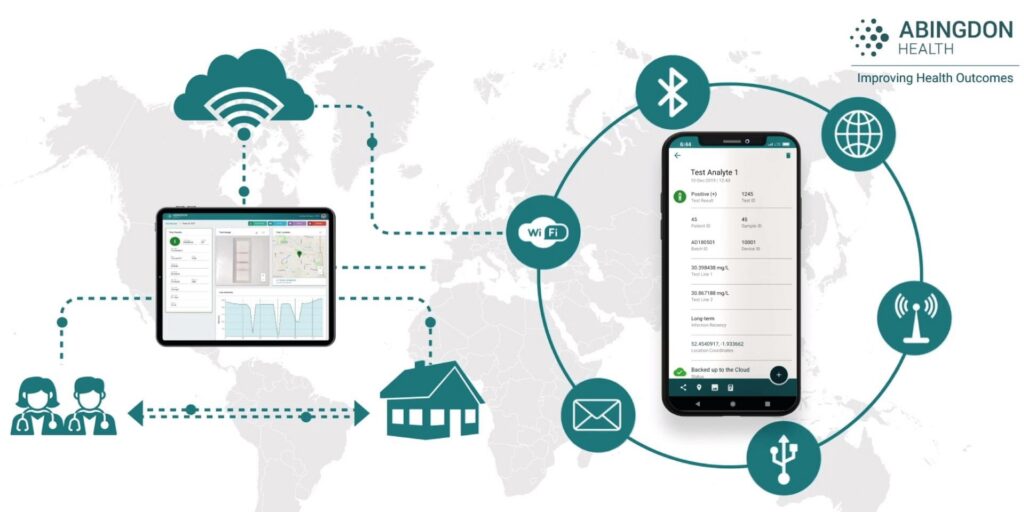
A rapid test is only as useful as the decision it informs. Faint lines read by eye, results that never reach a patient record and no view of how a test performs in the field all limit what a diagnostic can achieve, and what a regulator, buyer or clinician will accept.
Readers, connected apps and AI-enabled medical devices can close those gaps, but only when they are designed with the immunoassay rather than bolted on later. Reworking a strip to suit a reader late in development means paying twice for the same IVD development programme.
That is why reader and software requirements sit in our development plan from the concept phase, next to the assay chemistry, the materials and the manufacturing process. Where your product becomes software as a medical device (SaMD), our colleagues at Abingdon AI & MedTech provide specialist SaMD and AI regulatory support, so technical and regulatory work move together.