Bringing a sterile medical device to market is a significant milestone. Once a sterilisation process has been selected, validated and accepted as part of the regulatory submission, it can feel like the final hurdle has been cleared. Jason Gray, consultant and sterilisation specialist at CS Lifesciences, part of the Abingdon Health group, explores why process selection and validation are only one part of a much broader sterilisation strategy that must support product quality, regulatory compliance and commercial manufacturing throughout the product lifecycle.
Jason has hands-on validation experience across gamma, e-beam, ethylene oxide, moist heat and dry heat sterilisation methods, and the requests he gets usually arrive late in development. Materials, packaging and suppliers have often been chosen, and in some cases design is locked. Those choices can make sterilisation harder than it needs to be. A second pattern is just as common among smaller developers: a sterilisation supplier chosen to fit early volumes, which the business later outgrows triggering a full revalidation nobody had budgeted for. Here, he shares what he sees on the ground:
Sterilisation Starts Long Before Validation
The request I hear most often is simply: ‘Jason, we need this sterilised. What do we do?’
In my experience, the smoothest projects are often those where sterilisation has been considered from the outset, rather than as a final-stage requirement. Addressing sterilisation early in development can minimise complexity, additional costs and challenges navigating the regulatory pathways.
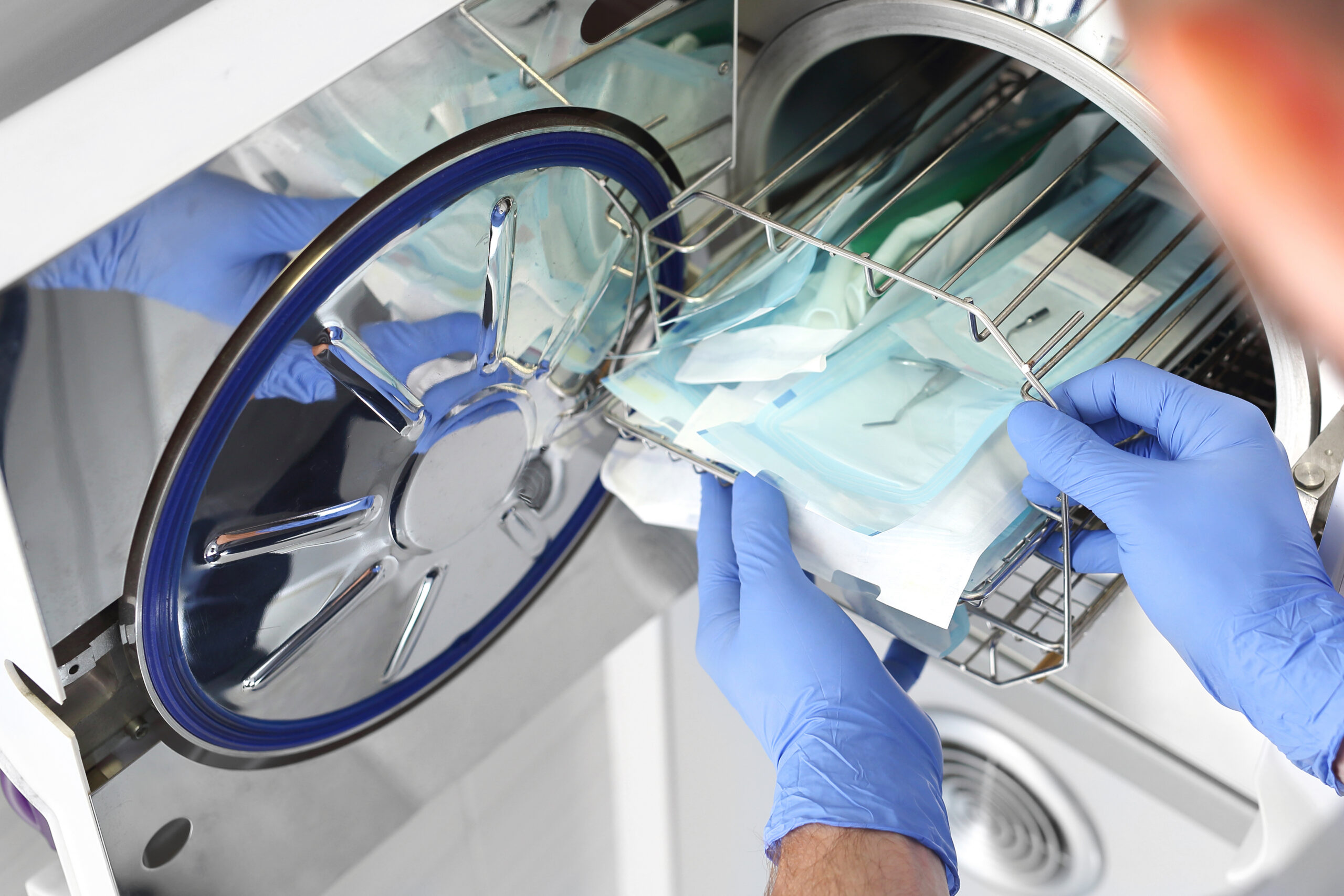
A common misconception is that sterilisation is simply the final step before a product can be released. In practice, the sterilisation method selected can influence everything from material choice and packaging design to manufacturing processes and supplier decisions. Some design decisions are driven by how difficult a device will be to sterilise with the chosen method.
Early design team education about sterilisation considerations is invaluable in the long run, because every sterilisation method brings its own advantages and limitations. The most appropriate option depends on factors such as device materials, product design, internal geometries and the presence of any electronic components.
For example:
- Radiation sterilisation (gamma, electron beam and X-ray, validated to the ISO 11137 series) is a dry process that does not leave chemical residues. This can reduce biocompatibility concerns associated with residual sterilising agents and support patient safety compared with some gas-based methods. However, radiation can degrade certain polymers and damage electronic components, so material and device compatibility must still be carefully assessed.
- Ethylene oxide (EO) sterilisation, validated to ISO 11135, relies on gas reaching all areas of a product, which can create additional challenges for devices with long, narrow lumens or complex internal pathways. As a gentler, low-temperature process, it is often the go to alternative when a product cannot be irradiated.
- Moist heat (steam, ISO 17665) and dry heat (ISO 20857) are well established but unsuitable for many temperature-sensitive materials.
- Vaporised hydrogen peroxide (VHP), recognised by the FDA in 2024 as an established sterilisation method, offers a low-temperature option for some heat- and radiation-sensitive devices.
Packaging follows the method too, because the sterile barrier system must be compatible with the sterilising agent. The method must not compromise the device over its shelf life and developers must demonstrate that the product is not going to degrade.
These considerations are often far easier and less costly to address during product development than after a design has been finalised. By incorporating sterilisation requirements early, manufacturers can make informed decisions that support both product performance and long-term regulatory compliance.
Validation Matters, But It Isn’t a One-Time Exercise
Achieving a validated sterilisation process is a major regulatory milestone. It demonstrates that the process can consistently deliver the required sterility assurance level (SAL). Sterility cannot be tested into a finished product; it is assured through a validated, controlled process. However, validation should never be viewed as a one-off activity. ISO 13485:2016 (clause 7.5.7), now incorporated by reference into the FDA’s Quality Management System Regulation (QMSR), requires sterilisation processes to be validated before use and revalidated following product or process changes as appropriate. The EU MDR’s General Safety and Performance Requirements (Annex I, Section 11) likewise require devices labelled sterile to be processed using appropriate, validated methods. Sterilisation processes must remain in a validated state throughout commercial production, supported by documented evidence that demonstrates continued process control and effectiveness over time.
Manufacturers must continue to demonstrate that sterilisation processes remain effective over time and that products consistently meet the required sterility assurance and validated process requirements. Depending on the product and process, this may involve:
- Bioburden testing at defined intervals to ISO 11737-1, so changes in the microbial challenge are detected and trended.
- Dose audits for radiation-sterilised products under ISO 11137-1, every three months by default, to confirm the established sterilisation dose remains effective.
- A documented review of the sterilisation process and its validation, at least annually, which also informs whether requalification is needed in the coming year or two
- Requalification of the cycle at defined intervals, and following changes to product, packaging, loading pattern or equipment
This is often where organisations encounter unexpected challenges. Initial project budgets are frequently focused on achieving validation, while the resources required to maintain compliance over the long term are overlooked. In my experience, almost everyone underestimates the cost of sterilisation validation, and very few budget for maintaining it. Too often, that gap is found at audit: bioburden testing that has lapsed, or a cycle requalification that was never scheduled.
The most successful MedTech manufacturers recognise this from the beginning and incorporate ongoing maintenance activities into their wider quality and regulatory strategies, rather than treating them as future issues to address.
Sterilisation Is Part of a Wider Quality Strategy
Sterilisation does not happen in isolation. It is closely linked to broader quality, manufacturing and contamination control systems.
Before a product reaches the sterilisation stage, it is typically manufactured within controlled environments designed to minimise bioburden. Maintaining control of microbial contamination helps ensure that sterilisation processes remain effective, predictable and repeatable. The bioburden test methods themselves are standardised (ISO 11737-1), because an inaccurate test gives false assurance: a product could carry contamination nobody knows about.
Bioburden can be influenced by a range of factors, including:
- Materials and component suppliers
- Manufacturing environments
- Operator practices
- Cleanroom controls
- Proper use of personal consumables, e.g. garments, masks, gloves
- Cleaning and maintenance programmes
Personnel are often one of the largest sources of contamination within controlled environments, which is why effective training, robust procedures and well-managed environmental controls remain critical.
Ultimately, the goal extends beyond sterilising a product once. Manufacturers need a reliable and repeatable process capable of consistently delivering sterile devices throughout commercial production. Sterilisation should therefore be viewed as part of a broader quality system rather than an isolated manufacturing activity. Effective contamination control, supplier management, environmental monitoring and ongoing process oversight all contribute to maintaining confidence in product sterility and supporting regulatory compliance.
Choosing the Right Sterilisation Partner
For many manufacturers, selecting a sterilisation provider can be almost as challenging as choosing the sterilisation method itself.
Large contract sterilisation providers often focus on higher-volume programmes, while early-stage manufacturers may only require smaller production runs. A validation costs what it costs, whether you’re making one box or a million. For a start-up that only needs to sterilise early samples, that can mean tens of thousands of pounds before any revenue.
This creates an important strategic decision for manufacturers. A smaller provider may offer the right fit during early commercialisation. However, as production volumes increase, transitioning to a larger provider may become necessary. How much work a move involves depends on where a device moves to. Large providers with multiple sites often run near-identical chambers and processes, so moving between their facilities may be supported by a documented equivalence assessment rather than a full revalidation. For EO, AAMI TIR28 sets out an approach to product adoption and process equivalence; for radiation, an established sterilisation dose can be transferred under defined conditions, although dose mapping must be repeated at the new facility. Moving to a different supplier entirely is another matter and generally means a full validation, as no two suppliers’ processes are identical.
The implications extend well beyond the immediate project. Supplier decisions can influence scalability, future timelines, regulatory obligations and long-term operational flexibility. The first choice of provider is therefore a strategic one, and any likely future transfer should be factored into project budgets from the outset.
Managing Regulatory Change
Medical device regulations continue to evolve, bringing updated standards, changing expectations and increasing scrutiny of technical documentation. Manufacturers may identify compliance gaps during audits, technical documentation reviews or regulatory transitions, but determining the most practical route to remediation can often be far more challenging than identifying the issue itself. The Abingdon AI & MedTech regulatory team sees this frequently with products transitioning from the MDD to the MDR: the notified body is not a consultant; they’re not going to explain what needs to be done to achieve compliance.
Experienced sterilisation and regulatory specialists bring significant value enabling organisations to interpret findings correctly, evaluate remediation options and implement practical solutions that maintain compliance while supporting continued market access.
The same principle applies when sterilisation standards evolve. Manufacturers need to understand how regulatory changes affect existing products and determine what evidence may be required to demonstrate ongoing compliance. When a sterilisation standard is revised, we review the changes and document whether each client’s existing validation still meets it. A proactive approach is typically far less disruptive than responding to issues following an audit or regulatory review.
Taking a Lifecycle Approach
Sterilisation is often viewed as a technical requirement, but it is better understood as a lifecycle activity that influences medical device product development, validation, manufacturing, shelf life, quality management and regulatory compliance.
Manufacturers that consider sterilisation early are better positioned to make informed design decisions, select appropriate suppliers, establish realistic project budgets and reduce the risk of costly surprises later in development.
Just as importantly, they can create a sustainable framework for maintaining compliance after product launch, helping ensure that validation activities continue to support product safety and long-term commercial success.
Need Support With Your Sterilisation Strategy?
At Abingdon AI & MedTech, the Abingdon Health division that includes CS Lifesciences, we support manufacturers with sterilisation strategy, validation management, supplier oversight and ongoing compliance activities. Whether you are planning a sterilisation validation programme, evaluating supplier capabilities or addressing compliance challenges, specialist MedTech regulatory support can help reduce risk and maintain momentum. Get in touch to speak with our regulatory experts and find out how we can help bring your medical device to market.