Molecular and hybrid lateral flow
Pairing nucleic acid amplification with a lateral flow read-out gives molecular-level specificity in a simple, near-patient format.


Molecular and hybrid lateral flow, biosensors, novel labels and multiplex formats, taken from feasibility to an IVD product that can be made at volume.
Lateral flow is still the quickest route to a simple, low-cost result. Some clinical and field questions need more, though: a lower limit of detection, a measured value rather than a yes or no, a nucleic acid target, or several analytes from one sample. Programmes often stall here, because the technology they need sits between platforms.
We bring the same design-for-manufacture discipline to emerging formats that we apply to established ones. Feasibility work gives you an honest view of which format will meet your claims, and a development plan that a production line can actually follow.
Pairing nucleic acid amplification with a lateral flow read-out gives molecular-level specificity in a simple, near-patient format.
Abingdon Health’s assay development experience combined with a flexible manufacturing capacity means single or multiple target nucleic acid lateral flow tests can be produced to specific specifications and volumes. We are delighted to be supporting decentralised molecular testing with the provision of straightforward nucleic acid companion diagnostics.
Electrochemical and optical biosensors can deliver quantitative results from small sample volumes. We support feasibility, prototyping and the material and process choices that decide whether a biosensor can be made consistently at scale.
Beyond colloidal gold, carbon and latex, we evaluate new labels and nanoparticles, including through university research partnerships in the US, to lift sensitivity without making the test harder to use.
Detecting several analytes, or moving to a numerical result, changes strip design, reader choice and regulatory evidence together. We plan all three at once.

Abingdon Health is proud of being approachable and values its long-term collaborative partnerships. Dedicated account managers and experienced teams of R&D, tech transfer and manufacturing experts work hard to ensure the delivery of optimum rapid test solutions for the life cycle of product portfolios.
We’re passionate about imparting our knowledge and expertise to help you hit your goals. Contact our team to see how we can take your assay from R&D to end-users.

Companion diagnostics
Integrated companion diagnostics development and manufacturing. Diagnostics expertise from biomarker validation through FDA approval and commercial launch.
Companion diagnostics (CDx) represent one of the most technically and regulatorily complex pathways in the diagnostic industry. The coordination required between drug development programmes, diagnostic validation, and parallel regulatory submissions creates challenges that few companion diagnostics CDMOs are equipped to navigate successfully.
Abingdon Health specialises in moving companion diagnostic projects from initial biomarker concepts through FDA approval and commercial manufacturing. Our integrated approach as an in vitro diagnostics development partner addresses the unique complexities of CDx development, where technical performance, regulatory strategy, and manufacturing scalability must advance in parallel from day one.
Lateral flow is not always the right answer for a CDx claim. Where a programme needs quantitative results or a nucleic acid target, we assess molecular and reader-based formats in parallel during feasibility.

Unlike standalone diagnostics, companion diagnostic development operates under fundamentally different constraints. Your timeline is determined by your drug development programme. Your regulatory submission must demonstrate not just analytical validity but clinical validity within the context of specific therapeutic decisions. Your manufacturing processes must scale to match drug launch volumes with zero tolerance for supply interruptions.
These constraints mean that technical decisions made during early development have cascading implications for regulatory approval timelines and commercial manufacturing feasibility. Choosing antibodies that perform brilliantly in research-grade assays but cannot be manufactured consistently at scale creates problems that emerge months or years later. Designing test formats that work perfectly in controlled laboratory settings but fail reliability requirements in real-world clinical use leads to expensive redesigns during validation.
We’ve built our companion diagnostics development capabilities around this reality. Our development team includes scientists with direct experience in CDx programmes who understand that “good enough for research” is fundamentally different from “acceptable for FDA submission.”
Our regulatory specialists have navigated the specific requirements of Pre-Market Approval (PMA) submissions for companion diagnostics, including the coordination required with parallel drug application reviews.
Early-stage evaluation of whether your biomarker concept can be translated into a manufacturable lateral flow format. We assess antibody availability, sample matrix compatibility, required sensitivity and specificity parameters, and manufacturing scalability before significant investment occurs.
Design for manufacturing is embedded from initial development. We optimise assay architectures that deliver required clinical performance while maintaining manufacturing robustness. Our lateral flow assay development services include rigorous design review checkpoints that catch potential manufacturing or regulatory issues before they become expensive problems.
Companion diagnostics require successful performance in clinical trial settings under real-world conditions. We provide clinical-grade test manufacturing, lot-to-lot consistency documentation, stability data for trial durations, and technical support for clinical sites. Our quality systems generate the documentation FDA expects to see in your PMA submission.
Comprehensive validation & verification studies designed to meet FDA’s expectations for analytical validity (precision, accuracy, sensitivity, specificity, interfering substances) and clinical validity (performance in intended-use populations). We design validation protocols that generate approvable data efficiently for companion diagnostic assays and multiplex immunoassay formats.
Clinical performance studies can also be designed and run through Abingdon Analytical, keeping analytical and clinical data in one traceable record.

The regulatory pathway for companion diagnostics is notably more complex than standalone diagnostics. Your submission must address not just analytical performance but clinical utility within the context of specific therapeutic decisions.
Our regulatory team has direct experience with PMA submissions for companion diagnostics, including:
We understand that regulatory approval for CDx products isn’t just about meeting minimum technical requirements. It’s about building a compelling case that your test reliably identifies patients most likely to benefit from the associated therapy in precision medicine companion diagnostics applications.
Companion diagnostic manufacturing faces unique challenges compared to standalone diagnostic tests. Your volumes must align with drug launch projections, often requiring rapid scaling from validation batches to commercial production measured in hundreds of thousands or millions of tests annually. Supply interruptions aren’t just business problems; they directly impact patient access to potentially life-saving therapies. Our manufacturing approach addresses these realities:
Manufacturing considerations inform development decisions from the outset. We design immunodiagnostic assays that can be manufactured consistently at scale, not just produced successfully in small research batches.
Our dual-facility strategy (Madison, Wisconsin and York, UK) provides manufacturing redundancy and geographic flexibility. If tariffs, regulatory requirements, or supply chain considerations favour one location over another, we can accommodate shifts without process revalidation.
ISO 13485-certified quality management systems with documented design controls, process validations, and post-market surveillance capabilities. Our quality infrastructure meets FDA expectations because it’s built on that foundation, not retrofitted to minimum compliance levels. As one of the top lateral flow CDMO companies specialising in IVD development, we understand the unique requirements of developing in vitro companion diagnostic devices.

We provide realistic assessments based on direct experience with similar programmes. If we don’t believe we can deliver what your programme requires, we’ll tell you directly and explain why. That honesty early saves everyone time and resources.
A pharmaceutical company developing a novel immunotherapy approached us after preliminary biomarker identification in clinical samples. Their challenge: translate a research-grade immunoassay into a companion diagnostic device suitable for FDA approval and commercial launch aligned with their drug approval timeline.
The Solution: Our team developed a lateral flow immunoassay format optimised for the required sample type, designed validation studies that generated approvable analytical and clinical performance data, and established manufacturing processes capable of scaling from clinical trial supplies through anticipated commercial volumes. Refer to our Case Studies page for further examples.

Companion diagnostic projects require careful evaluation before significant investment occurs. Not every biomarker concept translates successfully into a manufacturable diagnostic format. Not every lateral flow architecture can meet the performance requirements your clinical programme demands.
Our initial consultation as your CDx development partner addresses these fundamental questions:
Abingdon Health is certified to ISO 9001 and ISO 13485, and is compliant to FDA 21 CFR 820 (QMSR) and GMP. Abingdon Health also meets regulatory requirements of UK MDR 2002, the IVDD 98/79/EC and the IVDR 2017/746. In addition, our facilities have an establishment registration with the FDA.
From the Knowledge Centre
Practical guidance from the specialists who deliver this work every day.
 Article
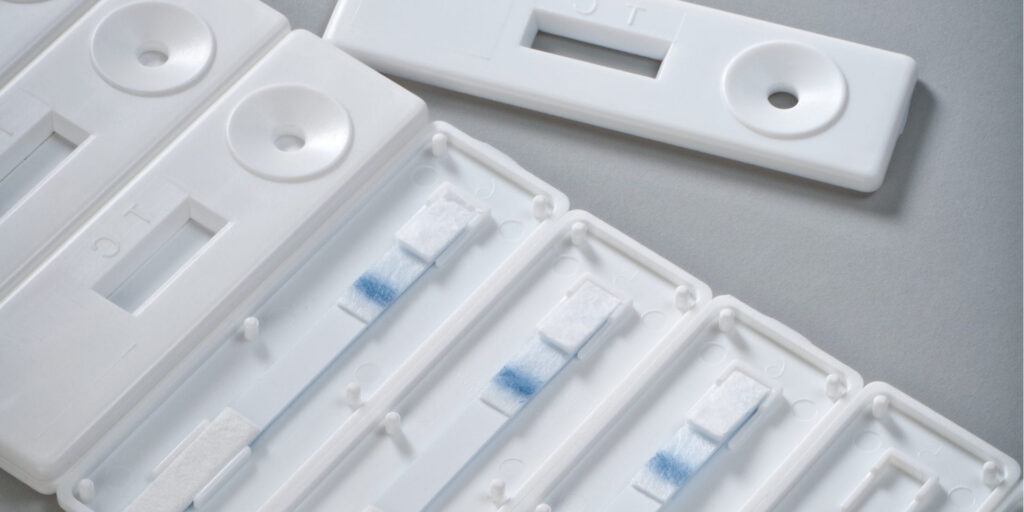
Innovation in Signal Generation: Labels
Lateral Flow Market 2.0: CEO, Chris Yates highlights the increasing range of labels used within lateral flow tests to drive improved performance.
Article
Innovation in Signal Generation: Labels
Lateral Flow Market 2.0: CEO, Chris Yates highlights the increasing range of labels used within lateral flow tests to drive improved performance.
Also worth reading
 Article
LFA Design: Harnessing the Potential of Synthetic Peptides
Article
LFA Design: Harnessing the Potential of Synthetic Peptides
 Article
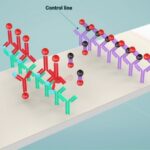
Why Particle Selection Matters for Lateral Flow Performance & Success
Article
Why Particle Selection Matters for Lateral Flow Performance & Success
 Article
How Innovation in Labels Is Driving Growing Use of Lateral Flow Technology
Article
How Innovation in Labels Is Driving Growing Use of Lateral Flow Technology
Case study
Discover how Abingdon Health partnered with MiraVista Diagnostics on lateral flow assay development, manufacturing and CDMO services.
Contact our team to see how we can take your diagnostic from idea to commercial success.