US Companies Are Reshoring Lateral Flow Manufacturing: Why It Matters for European Companies, and What to Look for in a Domestic CDMO
In our latest blog, Chris Yates, President of Abingdon Health USA Inc, explains how supply changes and manufacturing lines are shifting within the lateral flow industry, what’s driving this change, and how US and European companies looking to develop and manufacture lateral flow tests should respond.
The lateral flow industry spent the last two decades building supply chains optimised for cost. Components from specialist suppliers predominantly in Asia, lateral flow manufacturing consolidated in a handful of regions with China playing a major role, and shipping timelines measured in weeks rather than days. For most companies, this worked well enough, until it didn’t. COVID-19 exposed how fragile those supply chains actually were. Companies that needed to scale rapidly discovered that overseas manufacturing dependencies created bottlenecks at exactly the wrong moment. Shipping delays, export restrictions, and facility shutdowns turned manageable timelines into existential risks. Several years later, the lessons from that period are reshaping how diagnostic companies think about where their lateral flow products get made.
The Reshoring Drivers
The shift toward US-based lateral flow manufacturing is not driven by a single factor. Several forces are converging to make domestic production increasingly attractive for companies serving the American market.
Supply chain resilience sits at the top of most lists. Companies that experienced shipping disruptions, customs delays, or inability to visit manufacturing partners during travel restrictions are now prioritising geographic proximity. Having lateral flow contract manufacturing within the same country as your primary market eliminates an entire category of risk that previously seemed theoretical.
Regulatory proximity matters increasingly too. FDA engagement is simpler when your lateral flow CDMO (Contract Development and Manufacturing Organisation) facility operates in the same regulatory jurisdiction as your approval pathway. Site inspections, pre-submission meetings, and ongoing compliance conversations all benefit from proximity. For companion diagnostic development programs pursuing PMA or 510(k) clearance, having US-based manufacturing removes one layer of complexity from an already demanding regulatory process.
Speed to market is the third driver. When development and manufacturing teams operate in the same time zone – or better yet, can visit each other within a day – tech transfer accelerates, troubleshooting happens faster, and the iterative cycles that characterise early-stage IVD (in vitro diagnostic) scale-up compress significantly. For biotech companies burning cash between funding rounds, weeks saved during scale-up translate directly into extended runway.
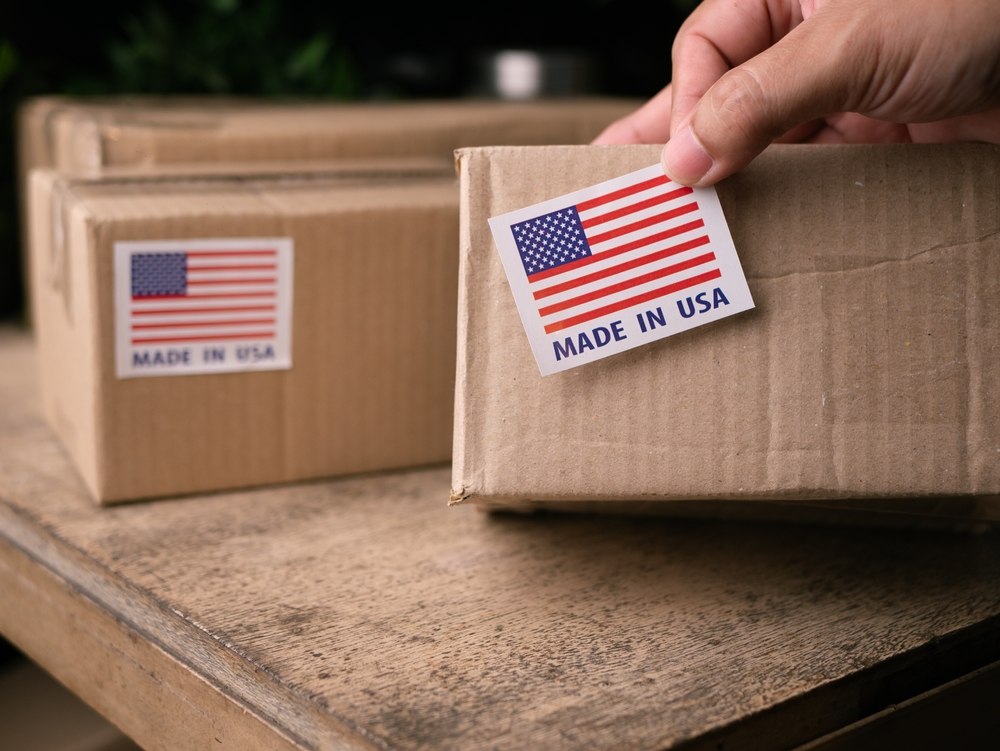
Finally, geopolitics and tariff uncertainty are also driving change. We are seeing increased requirement for local supply in public tenders across both USA and Europe as governments look to drive less reliance on political rivals and a greater control over the sourcing of strategic products such as rapid diagnostic tests and other in vitro diagnostic medical devices. Allied to this is the increase in tariffs as the United States has sought to refocus its demand towards domestic manufacturers. It is estimated that diagnostic products sourced from China have tariffs applied of up to 50% (as of February 2026). The UK is one of the best-placed exporters to the United States with tariffs of 10% (as of February 2026), which compares favourably to many territories including the European Union. It is worth noting also the impact of tariffs on components, which is driving not only a “Made in America” but also a “Procured in America” approach.
Why This Matters for European Companies
European diagnostics companies often assume reshoring is a purely an American concern. It is not. If your primary commercial market is the United States – and for most lateral flow device manufacturers pursuing significant revenue, it will be – then where your product gets manufactured has direct implications for your market access strategy.
US-based lateral flow development and manufacturing provides tangible advantages when pursuing federal and state procurement contracts, many of which include domestic manufacturing preferences or requirements. Grant-funded programmes, particularly those supported by BARDA or NIH, frequently favour or mandate US-manufactured in vitro diagnostic medical devices. As policy emphasis on domestic health security infrastructure grows, these preferences are likely to strengthen rather than diminish.
European companies also face a practical challenge: managing lateral flow assay manufacturing relationships across an eight-hour time zone gap while simultaneously navigating FDA requirements creates coordination overhead that compounds over time. An IVD CDMO partner with both European and US facilities offers the flexibility to develop close to home while manufacturing close to your market, without forcing a binary choice between the two.
What to Look for in a US-Based Lateral Flow CDMO
Not all diagnostics contract manufacturing partners are equally equipped for the specific demands of lateral flow immunoassay production. The technology requires specialist expertise that differs substantially from pharmaceutical manufacturing or even other diagnostic formats. When evaluating a lateral flow CDMOs, several capabilities distinguish partners who can genuinely deliver from those who will learn on your project.
Integrated lateral flow development and manufacturing capability is the most important differentiator. CDMOs that only offer manufacturing require you to complete assay development elsewhere and then manage a tech transfer between two organisations with different equipment, processes, and institutional knowledge. Partners that provide lateral flow assay development services through to commercial manufacturing under one roof eliminate the hand-off risk that derails timelines and inflates costs.
When the team that developed your lateral flow immunoassay is the same team scaling it, implicit knowledge transfers naturally rather than getting lost in documentation gaps.
Regulatory experience specific to your approval pathway also matters enormously. A lateral flow CDMO with deep FDA submission experience – particularly for CDx development and companion diagnostic assay PMA or 510(k) programmes – understands what manufacturing documentation, validation protocols, and quality systems FDA expects to see. This experience prevents the expensive discovery, common with less experienced partners, that manufacturing processes need restructuring to satisfy regulatory requirements identified late in the submission process.
Dual-site flexibility is an emerging advantage worth considering. A limited number of IVD CDMOs offer manufacturing facilities in both the US and Europe, with the ability to develop in one location and manufacture in another – or in both – or to maintain manufacturing redundancy across geographies. This provides supply chain resilience while keeping your primary production close to your primary market, an approach that addresses both the reshoring imperative and the practical reality that many diagnostic companies operate internationally.
Finally, look for demonstrated experience with your specific product type and scale requirements. A CDMO that has successfully manufactured companion diagnostics, infectious disease tests, or food safety assays at commercial volumes brings process understanding that cannot be replicated by general-purpose manufacturers entering the lateral flow space. Ask for specific examples of programs they have taken from development through regulatory approval to commercial supply. The answers will tell you whether their capabilities match your needs.
Finally, look for demonstrated experience with your specific product type and scale requirements. A lateral flow CDMO that has successfully manufactured IVD companion diagnostics, infectious disease tests, or food safety assays at commercial volumes brings process understanding that cannot be replicated by general-purpose manufacturers entering the lateral flow immunoassay development space. Ask for specific examples of programs they have taken from development through regulatory approval to commercial supply. The answers will tell you whether their capabilities match your needs.
Making the Decision
Reshoring is not about abandoning global supply chains. It is about building manufacturing strategies that match commercial realities. For companies whose primary revenue will come from the US market, domestic lateral flow manufacturing is becoming less of a nice-to-have and more of a competitive requirement – for regulatory reasons, procurement access, speed to market, and supply chain resilience.
The companies making this transition most successfully are those choosing CDMO partners with genuine expertise, integrated lateral flow development-to-manufacturing capability, and the regulatory experience to support FDA submissions from a position of strength. The manufacturing decision you make today determines your commercial flexibility for years to come.
Abingdon Health provides integrated lateral flow development, tech transfer, and commercial manufacturing services from facilities in Madison, Wisconsin, USA and York, UK. Our dual-site capability enables companies to develop and manufacture close to their primary markets, with in vitro diagnostic regulatory expertise supporting FDA 510(k), PMA, and CE-IVDR submissions. Whether reshoring existing production or establishing US lateral flow contract manufacturing for the first time, our teams provide the specialist lateral flow expertise that general-purpose CDMOs cannot match. Get in touch with Abingdon Health to explore how our integrated approach can accelerate your path to market access.